What are the main press brake punch profiles?
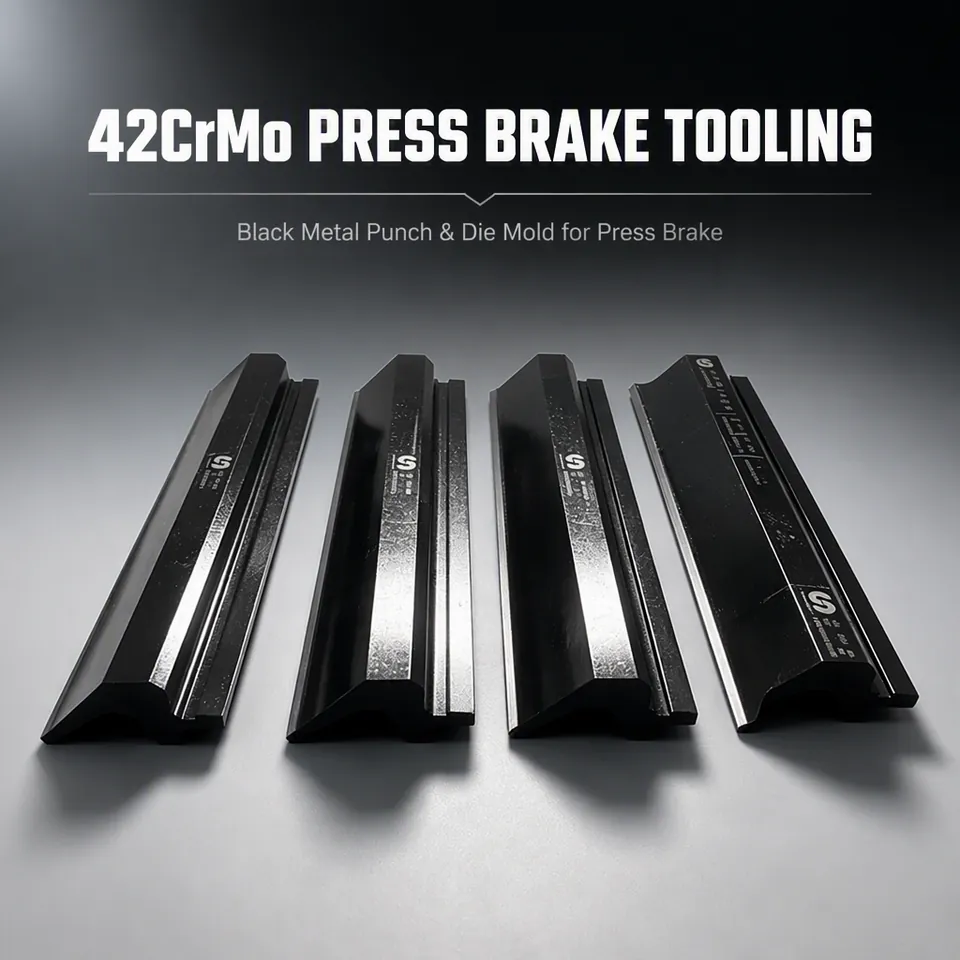
The main profiles are straight, gooseneck, acute, sash, radius and offset punches. The profile decides what the punch can reach over, and the included angle decides which bend angle it can produce in air bending.
Punch profiles and when to use each
Match the profile to the obstacle, not to the angle. A gooseneck reaches over an upstand, an acute profile forms a narrow angle, and a straight profile is the default where there is nothing in the way.
| Profile | Included angle | What it is for | Load note |
|---|---|---|---|
| Straight | 88° typical | General air bending with no obstruction | Highest rated load of the common profiles |
| Gooseneck | 30–88° | Reaching over a return flange or an upstand | Lower than straight because the section is thinner |
| Acute / sharp | 30–60° | Acute bend angles | Lowest tip load; check the rating |
| Sash / window | Varies | Deep narrow sections such as window frames | Section-dependent |
| Radius | Varies | Forming a controlled inside radius | Load spread over a wide tip |
| Offset / Z | Staggered | A step or joggle in one stroke | Purpose-made for the part |
How is a press brake punch specified?
A punch is specified by its interface, its overall height, the included angle, the tip radius, the segment lengths and the tool steel. All six have to match the machine and the job.
- Interface: Amada 13 mm tang, Trumpf / Wila 20 mm safety tang, American 1/2 in shank or European.
- Overall height: must suit the machine's ram and the planned die opening.
- Included angle: 88 degrees for general work, acute angles for narrow bends.
- Tip radius: sets the inside radius together with the die opening.
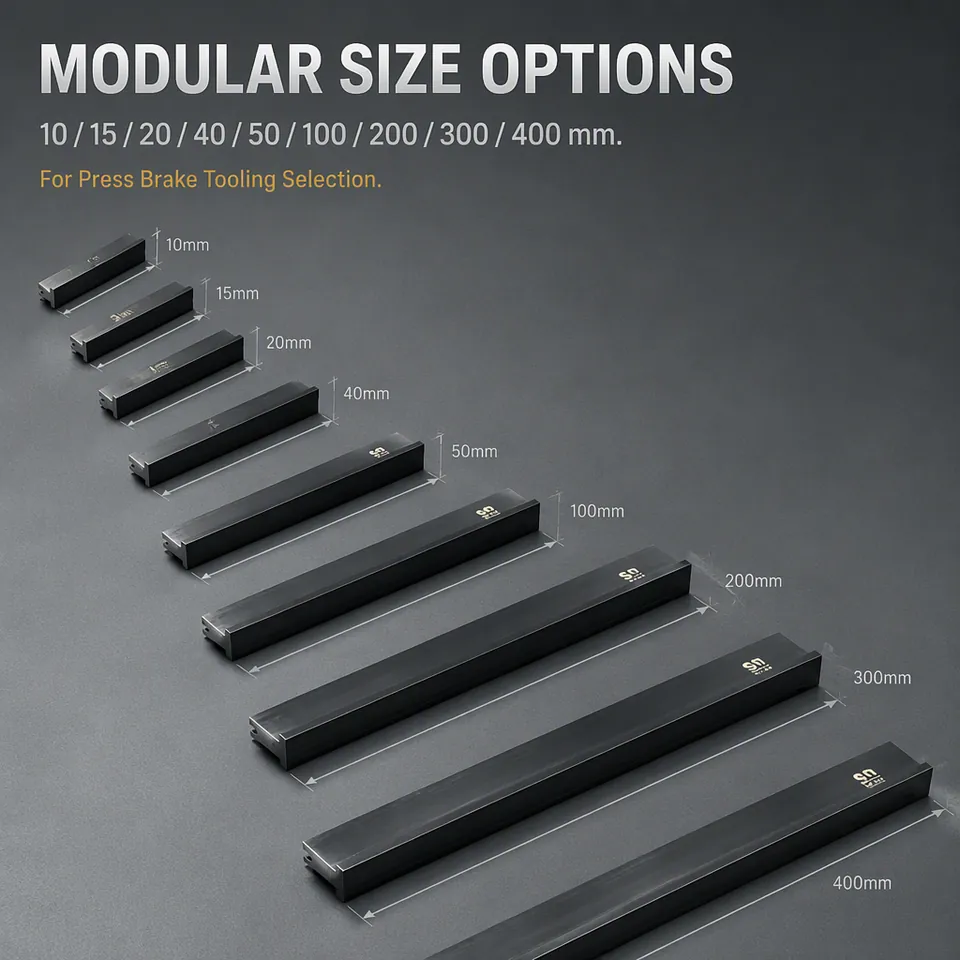
- Segment lengths: built up to the bend length, with short segments for clearance.
- Tool steel and hardness: chosen for wear life against the material being bent.
What does the punch tip radius control?
In air bending the inside radius is set mainly by the die opening, and the punch tip radius has to be smaller than the radius the die will produce, otherwise the tip defines the radius and creases the inside surface.
| Tip radius | Effect | When it applies |
|---|---|---|
| Below about 0.63 × t | Sharp bending; the tip creases the inside surface | Avoid unless the part demands it |
| ≈ 1 × t | Normal air bending with a well-defined radius | General practice |
| Larger than the die produces | The tip sets the radius instead of the die | Used deliberately for a controlled radius |
Which punch should I use for a return flange?
A gooseneck punch. Its deep, offset profile clears the upstand that has already been formed, so the bend can be made without the punch body hitting the flange.
If the flange is very deep or the part is a closed box, the sequence may have to change as well as the profile. See the bend sequence page for the collision checks.
Does the punch angle have to match the die angle?
No. In air bending the punch angle only has to be narrow enough to enter the die without touching the shoulders at the finished angle. The bend angle comes from the depth the punch reaches, not from the punch angle.
Related technical pages
Press brake dies
Die types, V openings and when to use each.
Gooseneck punches
The profile that solves most flange collisions.
Acute punches
30, 35, 45, 60 and 88 degree profiles.
Tooling load calculator
Check the tip load before running a narrow profile.
Next step
Send the machine details and the part drawing and we will specify the punch profiles and lengths you need.
Request a quotation