What is a press brake tool holder?
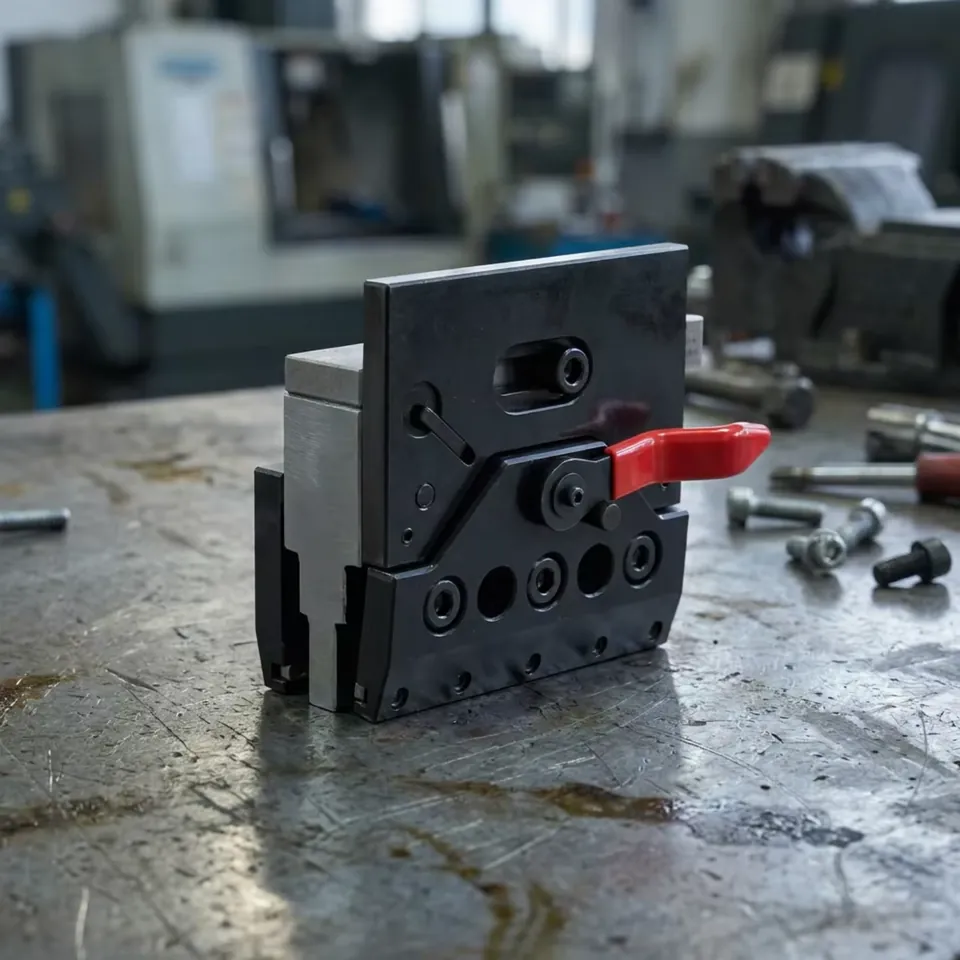
A tool holder is the intermediate piece that clamps the punch into the ram, or seats the die into the rail. An adapter holder lets tooling from one interface be used in a machine built for another, at the cost of extra height.
What is the difference between a holder and an adapter?
A holder is part of the machine's normal clamping arrangement and holds the tool family the machine was built for. An adapter changes one interface into another so a different tool family can be used.
| Item | Purpose | Consequence |
|---|---|---|
| Standard holder | Clamps the tool family the machine was built for | None; this is the design case |
| Adapter holder | Lets a different tool family fit | Adds height, reducing shut height |
| Die holder or rail | Seats and locates the die | Determines die body width that will fit |
| Precision shim | Corrects tool height after regrinding | Must be kept with the tool set |
Why does the holder matter so much?
The holder determines whether the tool seats squarely and repeats its height. A holder that does not seat fully produces a bend angle that varies along the length, which operators often blame on the tool or the material.
- The seat is the datum for the tool height, so it must be clean and undamaged.
- The clamp pressure has to be sufficient but not enough to distort the tool.
- Worn holders give a varying angle and are easy to overlook.
- A damaged seat should be repaired rather than compensated for.
Can I use an adapter to fit cheaper tooling?
Only where the extra height is available and the rated load is respected. An adapter raises the punch, which reduces the shut height and can limit the die opening, and the joint between adapter and tool is an extra place for the load path to be imperfect.
How do I know which holder my machine needs?
It follows from the tooling interface. Identify the interface from the tang and the clamp, and the holder is the one made for that family. If the machine has been retrofitted, confirm which clamp is actually fitted.
For a retrofit, the clamp installed on the machine decides the tooling, not the machine's original specification. Measure the clamp and the existing tool before ordering.
Related technical pages
Clamping systems
Mechanical, hydraulic and pneumatic clamps.
Tooling compatibility guide
Identify the interface the holder has to match.
Regrinding guide
Correcting tool height after regrinding.
Tooling drawing guide
What to send so the holder and tool match.
Next step
Send a photograph of your clamp with a ruler in shot and we will tell you which holder and tooling family fit it.
Request a quotation